Sergei Ivanovich Sukhonos
19 May 1950 – 30 January 2025
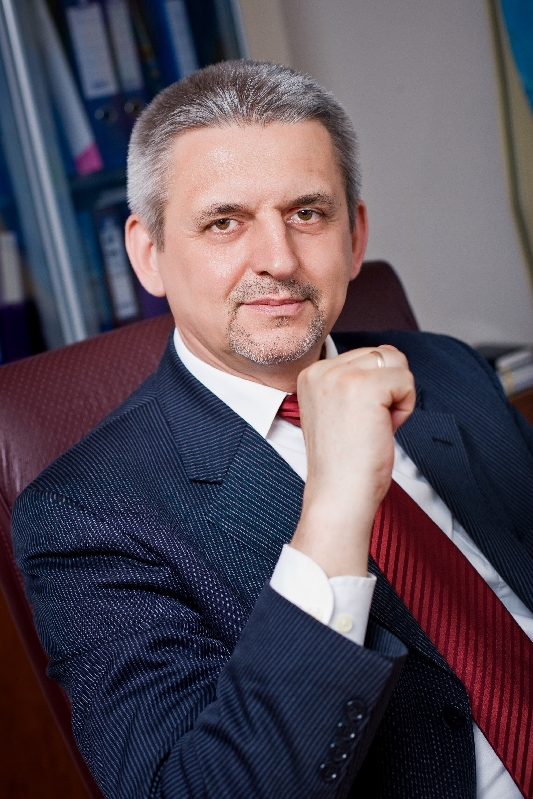
Sergei Ivanovich Sukhonos was born on May 19, 1950, in Volgograd (formerly Stalingrad), Russia. He graduated from the Volgograd Polytechnic Institute with a degree in mechanical engineering, specializing in abrasive tools. After working as a production engineer at the Volzhsky Abrasive Plant, he transferred to the Volzhsky branch of VNIISH — the All-Union Institute of Abrasives and Grinding — where he later defended a dissertation on the wear resistance of press-molds and earned the degree of Candidate of Technical Sciences.
His engineering background did not confine his intellectual interests. From his student years, Sukhonos was driven by a single overarching question: How is the world organized? This question led him, independently and outside academic institutions, to pursue a systematic study of the structural regularities of the Universe.
The Discovery of Scale Periodicity
In the early 1970s, Sukhonos began mapping the sizes of the principal objects of the Universe — from the Planck-scale maximon (~10⁻³³ cm) to the Metagalaxy (~10²⁸ cm) — along a logarithmic scale axis. Working through scientific handbooks and reference literature, he observed that the most characteristic objects of the physical world are not distributed randomly across this axis. Instead, they recur at regular intervals of approximately five orders of magnitude (a factor of 10⁵): the proton, the hydrogen atom, the living cell, the human body, stellar cores, stars, galactic nuclei, and galaxies each occupy successive nodes along this scale.
This periodicity formed the basis of what he called the Wave of Stability — a diagram in which stable structural objects and their “nuclear” counterparts alternate in a sinusoidal pattern across the full scale range of the observable Universe.
Among the most striking results of this analysis was the position of the living cell on the scale axis. The average size of a cell (~50 microns, or 10⁻² cm) falls at the precise geometric midpoint between the smallest known physical particle and the Metagalaxy — equidistant on a logarithmic scale from both extremes. In particular, Sukhonos noted that the nucleus of a human reproductive cell, at the moment of fertilization, corresponds to this midpoint with remarkable precision. Every human being thus begins its existence at what he termed the scale center of the Universe.
A complementary finding concerned the human body itself: at approximately 10² cm (one meter), it falls at the scale center of the full range of living systems — halfway between the smallest known biological entity (a virus, ~10⁻⁵·⁵ cm) and the planetary biosphere (~10⁹·⁵ cm). This placed the human organism at the geometric midpoint of life’s scale domain, spanning exactly 15 orders of magnitude.
First Publication and Reception
Sukhonos presented these findings in 1979 at the First All-Union Conference on Classification Theory in Borok — a landmark interdisciplinary gathering that brought together physicists, biologists, geographers, linguists, and philosophers from across the USSR. The reception was immediate and enthusiastic. His stand presentation attracted sustained attention, and he was invited to write for the widely read popular-science journal Znanie–Sila (Knowledge is Power).
The resulting article, “Vzglyad izdali” (A View from Afar), was published in 1981 (issue 7, pp. 31–33). It introduced a general readership to the Wave of Stability diagram, the scale periodicity of the Universe, the cell at the scale center, and the concept of scale similarity across structural levels. The article attracted private admiration from several senior members of the USSR Academy of Sciences, but institutional recognition did not follow — in part because the work was inherently interdisciplinary and could not be evaluated within any single established discipline.
Theoretical Development: the 2000 Book and Beyond
Over the following two decades, Sukhonos continued developing the theoretical framework underpinning his empirical discoveries. In 2000, he published Masshtabnaya garmoniya Vselennoy (Scale Harmony of the Universe), the primary exposition of his mature theory. The book introduced the hypothesis that scale structure constitutes a fourth spatial dimension of the Universe — alongside the three ordinary spatial dimensions — and proposed a mechanism of standing scale waves analogous to standing waves in acoustics and optics. The observed periodicity of stable objects along the scale axis was interpreted as the nodal pattern of two interacting standing waves (a Basis Wave and an Evolutionary Wave), whose interference generates the observed sequence of structural levels.
The musical analogy was deliberate: Sukhonos argued that the ratios between scale levels mirror harmonic intervals, and that the Universe’s structural order reflects a kind of scale harmony — a term that gave the book its title. The book went through multiple Russian editions and was later translated and published in English under the title The New Dimension of the Universe.
Subsequent works extended the framework to other domains: the theory of civilizational development and historical cycles (The Relay of Civilizations, 2011), the logic of evolutionary processes (The Logic of Human Evolution, 2008), futurology and global scenarios (Where Is Humanity Heading?, 2024), and cosmological hypotheses including The Boiling Vacuum of the Universe (2000), which proposed a model of gravity based on vacuum dynamics. Altogether, Sukhonos authored more than twenty books and numerous articles spanning cosmology, systems theory, civilizational theory, and the philosophy of science.
Applied Work: Innovation and Invention
Sukhonos regarded the scale principle as practically applicable, not merely descriptive. His engineering career ran in parallel with his theoretical work and reflected a similar search for structural regularities. In the late 1980s and early 1990s, he founded several innovative enterprises in the field of diamond tooling, most notably MOnAliT — a company producing over 1,000 types of diamond and abrasive instruments for dentistry, construction, the glass industry, and precision engineering, using a proprietary vacuum-diffusion welding technology he developed. Several MOnAliT instruments were exported to Germany and Switzerland, where their properties were recognized as technically superior to existing alternatives. He also coordinated the Avangard innovation movement, which focused on applying systems-theory concepts to engineering and technological development.
Legacy
Sukhonos worked throughout his life as an independent researcher, outside the formal structure of academic institutions. His approach was consistently interdisciplinary and empirically grounded: he derived his conclusions from data in standard scientific reference works, applying systematic organization where others saw only unrelated facts across distant fields. The result was a body of work that connects cosmology, biology, and the study of complex systems through a single unifying structural principle.
He passed away on January 30, 2025, following a car accident in Moscow. At the time of his death, he was actively collaborating on the preparation of the English-language edition of his primary cosmological work. His ideas remain largely unknown to the international scientific community, and the translation and presentation of his writings is now a task taken up by colleagues and researchers who worked with him directly.
The books of Sergei Sukhonos are available in Russian at suhonos.ru. The English edition of The New Dimension of the Universe is available to read online on this site.